
Vaccinations
Eligible individuals can get vaccinated against illnesses such as Influenza, Covid, Shingles, Whooping Cough and other diseases by our trained pharmacists at Belmont City Community Pharmacy.
Bookings are preferred for all vaccinations. We may be able to accommodate walk-ins, however a short wait may be required.
Please bring to your appointment a form of identification e.g. driver’s license or passport and Medicare card.
If you do not have Medicare, your vaccination history can be linked to an Individual Healthcare Identifier (IHI) number.
Many vaccines are eligible (no charge) under the National Immunisation Program (NIP) for administration at the pharmacy.
If you have any questions regarding vaccinations, please visit the pharmacy and talk to one of our friendly pharmacists at Belmont City Community Pharmacy.
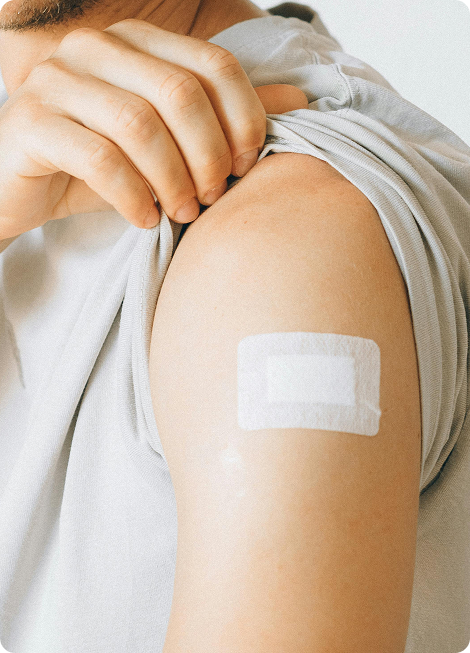
Influenza (Flu) Vaccine
2026 INFLUENZA VACCINATION
We now have our full supply of the updated 2026 influenza vaccinations including the nasal spray formulation suitable for children from 2 to 17 years of age.
When should I have the flu shot?
Influenza, also known as “the flu,” strikes thousands of Australians every year. Influenza can spread up to one day before symptoms develop and up to five days after symptoms present. It is a highly contagious illness. Unfortunately, this means that we run a risk of contracting the flu before realising we are ill. Furthermore, if they contract the flu, some residents of our community—such as those over 65, expectant mothers, and those with heart, lung, or kidney disorders—run the risk of serious consequences, or even death.
Generally, it takes about 2 weeks for the influenza vaccine to increase your body’s defences and help protect you against the flu. The peak season in Western Australia for influenza is usually June to September. While protection is typically expected to last for the whole season, optimal protection against influenza occurs within the first 3 to 4 months following vaccination. For this reason, we recommend waiting until April or early May. However, we are available for immediate vaccinations should you require a flu vaccination earlier for other reasons such as work or travel.
Everyone can benefit from the flu vaccine. Even if you are fit and healthy, you can still transmit the virus onto someone who is vulnerable and susceptible to becoming very sick if they catch the flu.
For the first time in the 2026 flu season, a needle-free influenza vaccine (FluMist®) is available FREE in WA until 31st July 2026 for eligible children aged 2 to 17 years. Unlike traditional flu shots, FluMist® is sprayed into the nostrils, making it particularly appealing for children who are anxious about needles. Read more about Flumist® in our blog here.
Influenza and Covid vaccinations can be administered at the same time.
You can book your vaccinations here.
RSV (Respiratory Syncytial Virus) Vaccine
Respiratory syncytial virus (RSV) is a common, highly contagious virus that infects the airways and lungs – from mild upper respiratory colds to severe lower respiratory conditions such as bronchiolitis (in infants) and pneumonia.
RSV spreads between people when an infected person produces small water droplets while talking, coughing or sneezing. The droplets can be inhaled by others or land on surfaces where the virus can live for several hours.
The RSV-associated hospitalisation rate is highest in infants under 6 months of age and generally declines sharply with age from early childhood. Hospitalisation rates then increase again in late adulthood. Aged care residents are particularly vulnerable due to shared living arrangements and frequent contact with staff and visitors.
Under the NIP, our pharmacist can administer free Respiratory Syncytial Virus (RSV) vaccinations for:
- Australians aged 75 and over
- Aboriginal and Torres Strait Islander people from the aged of 60
- Pregnant women at 28 to 36 weeks of pregnancy (prior to 37 weeks) to protect their baby.
These are to ensure they are protected from the common and potentially deadly virus.
You can book your vaccinations here.
COVID-19 Vaccine
The updated and most current Covid vaccine is now available.
Our pharmacists can support you with all the information you need about your COVID-19 vaccination.
Covid vaccinations can be administered at the same time as the influenza vaccination if required.
You can book your vaccinations here.
Whooping Cough (Diphtheria, Tetanus, Pertussis - dTpa) Vaccine
The dTpa vaccine is recommended for anyone who wishes to protect themselves against Diphtheria, Tetanus or Pertussis (Whooping Cough). The vaccination should be given to expectant mothers between mid 2nd trimester and early 3rd trimester of each pregnancy, ideally between weeks 20 and 32 to reduce the risk of them or their infants contracting whooping cough.
Additionally, vaccination against whooping cough is highly recommended for anyone who will be around newborns, such as friends, grandparents, partners of expectant mothers, and extended relatives. It is recommended to obtain booster doses every ten years or if the last booster dose was received more than 10 years ago.
You can book your vaccinations here.
Shingles (herpes zoster) Vaccine
Shingles (herpes zoster) is a painful, blistering rash. It is a reactivation of the virus that causes chickenpox.
Almost all adults are at risk of developing shingles, as more than 95 per cent of Australians over the age of 30 have been infected with chickenpox (the varicella-zoster virus).
It is estimated that 1 in 3 people will get shingles in their lifetime. As a person gets older the risk of getting shingles and neurological complications increases.
The initial symptoms of shingles can include tender and painful skin, sensitivity to light, headache and tiredness.
Symptoms and complications:
The shingles rash consists of painful red bumps which turn into fluid-filled blisters. These blisters will burst, and then heal into a crusty surface over 2 weeks.
The pain caused by shingles can persist for weeks or months, this is called post-herpetic neuralgia. If you have a shingles rash and it becomes infected, this could lead to scarring. Shingles occurring in the eye area could result in temporary or permanent vision loss.
Shingles vaccination is recommended for:
- People aged 50 years and over
- People aged 18 years and over who are immunocompromised
- People aged 50 years and over who live in the same household as someone who has a weakened immune system
Eligibility for a free shingles vaccination:
The National Immunisation Program (NIP) allows for a free 2 course Shingles vaccine to the following eligible people:
- People aged 65 years and over
- Aboriginal and Torres Strait Islander people aged 50 years and over
- Immunocompromised people aged 18 years and over with the following medical conditions:
- Haematopoietic stem cell transplant
- Solid organ transplant
- Haematological malignancy
- Advanced or untreated HIV.
When you receive the shingles vaccination, it will be administered in a two-dose course over a period of 2 to 6 months. Be sure to complete the full vaccination course to maximize the protection it offers.
You can book your vaccinations here.
Hepatitis B Vaccine
Hepatitis B is a viral infection affecting the liver, spread primarily through contact with bodily fluids. Immunisation is the best way to reduce your risk.
A hepatitis B vaccination can help reduce your chances of becoming infected. In Australia, it is part of the National Immunisation Program (NIP) and is also generally recommended for those who are travelling to countries where the disease is endemic.
You can book your vaccinations here.
Varicella (chickenpox) Vaccine
Chickenpox is a very contagious viral infection characterised by itchy blisters on the skin. It usually causes mild illness but can reappear later in life as shingles.
Anyone who has not had chickenpox or who has not been vaccinated against chickenpox is at risk of infection. Immunisation is the best way to reduce your risk.
You can book your vaccinations here.
Meningitis (Meningococcal A,B,C,W,Y) Vaccine)
Protect against meningitis
Meningococcal disease is a serious bacterial illness that can cause meningitis (inflammation of the protective layer surrounding the brain and spinal cord) and blood stream infection (septicaemia).
Bacteria can spread to vulnerable people – such as children – by being in close quarters with others, sharing utensils, kissing, or inhaling the second‑hand smoke of an infected person.
There are several meningococcal vaccines available in Australia that offer protection against specific types of meningococcal serogroups.
The meningococcal A, C, W, Y vaccine is available from Belmont City Community Pharmacy free of charge under the National Immunisation Program for young people in Year 10.
You can book your vaccinations here.
Pneumonia (Pneumococcal) Vaccine
Protect yourself against pneumococcal disease
Pneumonia is an infection of the lungs, caused by bacteria or viruses. Anyone of any age can contract pneumonia, but it is especially serious for young children and older people. It can lead to bloodstream infection and meningitis (inflammation of the membranes around the brain).
Vaccination is a safe and effective way to protect you from pneumococcal disease. Adults aged 65 years and over and Aboriginal and Torres Strait Islander people aged 25 years and over are able to receive the pneumococcal vaccine at no cost under the NIP.
You can book your vaccinations here.
HPV (human papillomavirus) Vaccine
Guard against HPV
HPV (human papillomavirus) is a common viral infection that is sexually transmitted. It can cause cancers and genital warts. The best protection is vaccination before exposure.
The HPV vaccine is available free of charge under the National Immunisation Program (NIP) for young people in Year 7.
Catch-up vaccination is also available for people who missed the HPV vaccination as a young person, up until 26 years of age.
You can book your vaccinations here.
Measles, Mumps and Rubella Vaccine
Measles is a highly infectious viral illness that can cause fever, malaise, cough, conjunctivitis and rash. Measles is often severe, complicated by ear infection, pneumonia, diarrhoea and, in some cases, acute encephalitis. Immunisation is the best way to reduce your risk.
Immunisation is the best protection against Measles, Mumps and Rubella and is highly recommended for all adults that haven’t already had two boosters, particularly those in high-risk groups like healthcare workers, parents or childcare workers, as well as those set to travel overseas.
Belmont City Community Pharmacy pharmacists can provide measles, mumps and rubella vaccinations for people over the age of 16.
You can book your vaccinations here.
Unfortunately, the vaccine is not suitable for women who are pregnant or planning to fall pregnant soon. If you fall into this category, please speak to your GP for more advice.
Polio (poliomyelitis) Vaccine
Polio is caused by the poliovirus. This is spread from person to person, mainly via water, food or hands contaminated with faeces or throat secretions of an infected person.
The virus can spread even in the absence of symptoms, and an infected individual may carry the virus for up to 6 weeks.
In rare occasions, the infection may result in potentially life threatening complications such irreversible paralysis of the arms, legs, or breathing muscles.
A polio vaccination can help reduce the risk of infection. In Australia, it is part of the National Immunisation Program (NIP) and is also generally recommended for those who are travelling to countries where the disease is endemic.
You can book your vaccinations here.